Quantum Entanglement Spacetime Theory
A revolutionary framework unifying general relativity and quantum mechanics by modeling spacetime as quantum information on a finite-valence hypergraph
Explore the TheoryWhat is QuEST?
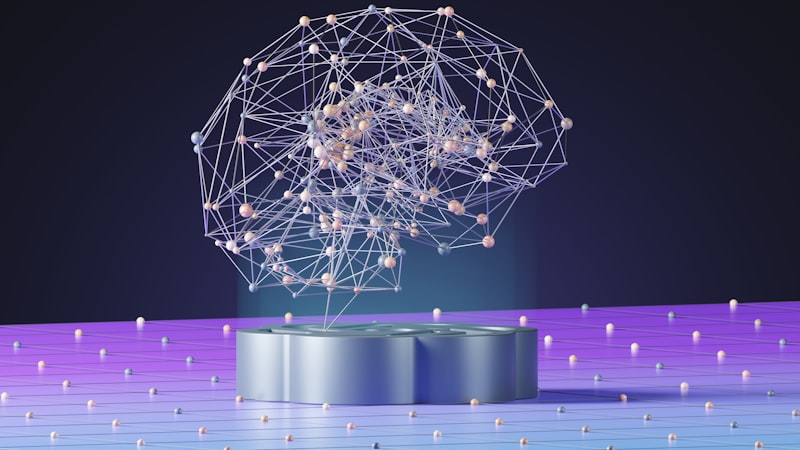
QuEST models spacetime as a quantum, finite-valence hypergraph where nodes hold qudits and hyperedges carry irreducible representations. The theory combines geometry with entanglement through a single area-entropy constraint that drives emergent gravitational dynamics.
Rather than quantizing gravity on a fixed spacetime background, QuEST derives spacetime itself from quantum entanglement patterns. Geometry, locality, and even the speed of light emerge naturally from the underlying hypergraph structure.
Developed through AI-assisted synthesis and guided by minimal principles, QuEST provides a compact framework where mathematical structure and conceptual insight evolved together, yielding testable predictions as a direct consequence of its internally consistent construction.
Guiding Principles
Three foundational principles constrain the theory and ensure every prediction is a necessary consequence
Background Independence
No absolute coordinates are assumed. All geometric and physical properties are defined relationally through data on the hypergraph, with spacetime emerging rather than being prescribed.
Holographic Finiteness
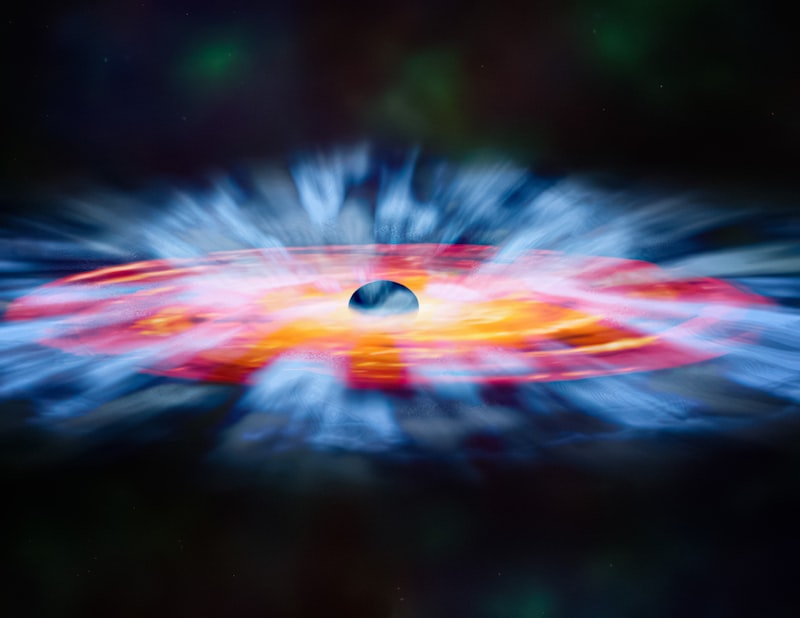
Information is limited to one bit per Planck area, consistent with black-hole entropy bounds. This single constraint ties geometry to entanglement and drives emergent gravity.
Minimality & Falsifiability
Every assumption must yield empirical consequences and testable predictions. The framework deliberately avoids unnecessary mathematical machinery, keeping the theory lean and verifiable.
0
Core Predictions
0
Published Papers
0
Foundational Postulates
0
Research Domains
Distinctive Predictions
QuEST produces four experimentally testable predictions, each targeting upcoming space missions and ground-based observatories
Graviton Dispersion
Modified dispersion relation with a quartic correction term at the Planck scale. The coefficient is uniquely fixed by the theory, not a free parameter.
LISA / Einstein TelescopeParity-Odd CMB Patterns
Specific CMB trispectrum signatures arising from parity violation in the underlying hypergraph dynamics, distinguishable from standard inflationary models.
LiteBIRD / CMB-S4Black-Hole Echoes
Post-merger gravitational wave echoes with logarithmic timing determined by the fuzzball microstructure at the string scale.
LISA / LIGO-VirgoVacuum Energy Correlation
A parameter-free correlation between vacuum energy density and the fine-structure constant, resolving the cosmological constant problem without fine-tuning.
Precision Spectroscopy
Scientific Impact
QuEST offers a fundamentally new perspective where geometry and entanglement are inseparable. Spacetime is not a stage on which physics plays out — it is itself a quantum information structure that emerges from entanglement patterns.
- Derives general relativity as the classical limit of hypergraph dynamics
- Resolves the cosmological constant problem through natural vacuum energy suppression
- Explains the Hubble tension without additional free parameters
- Predicts dark matter as topological entanglement defects
- Unifies string theory and loop quantum gravity at shared fixed points
- Provides falsifiable predictions targeting LISA, LiteBIRD, and CMB-S4
Dive Deeper into QuEST
Read the foundational paper, explore our growing body of publications, or get in touch to discuss collaboration.